

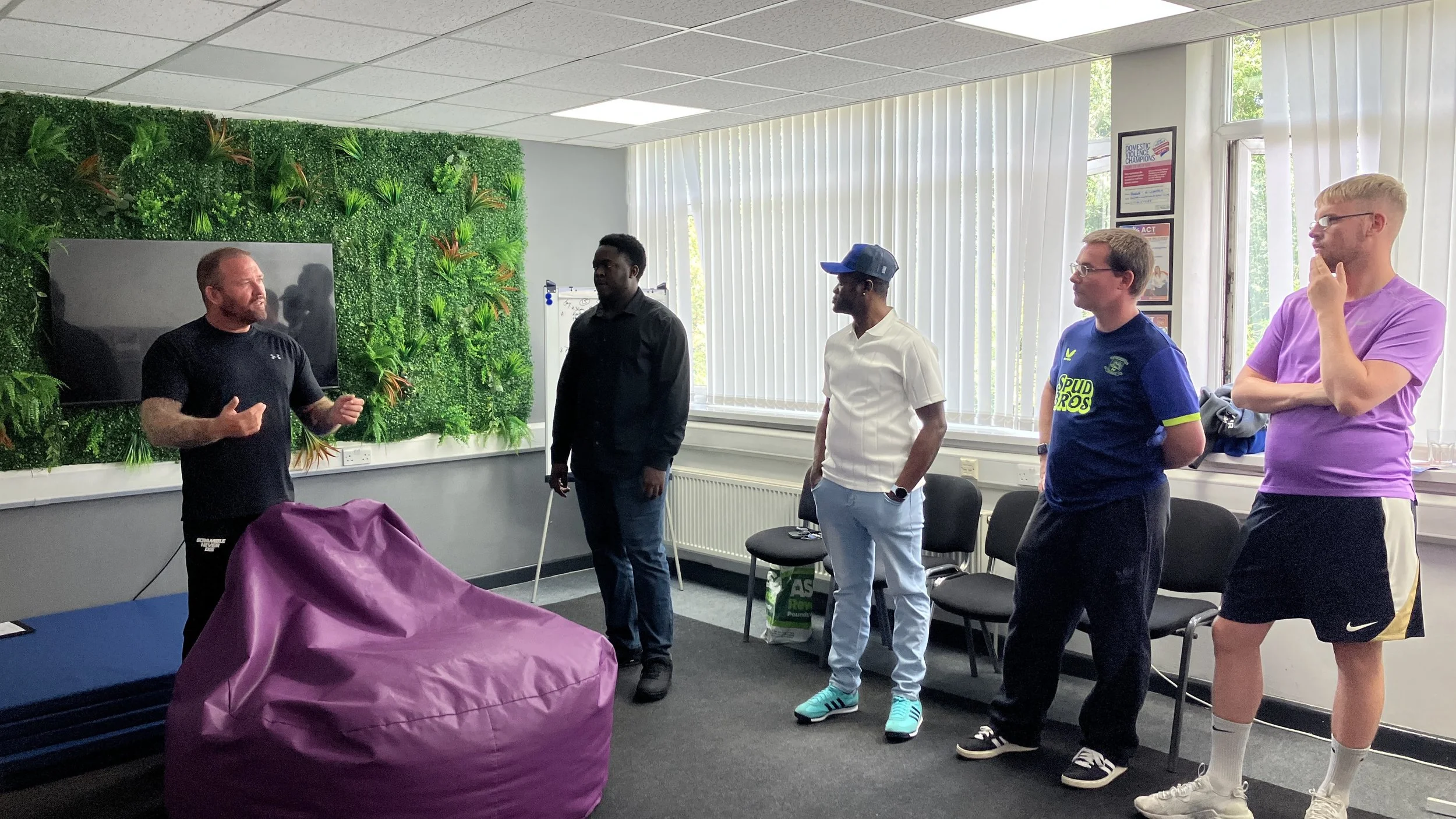
Bespoke PMVA Training
Positively Supporting Behaviour Through Trauma-Informed Practice
At ACT Education, we believe PMVA training should be about far more than teaching people what to do when behaviour becomes challenging. It should be about understanding why the behaviour is happening in the first place.
Our bespoke Positively Supporting Behaviour through Trauma-Informed Practices and PMVA training has been developed from more than 30 years of combined experience working across health, social care, education, children’s services and safeguarding.
Delivered by Amy and Neil — both Senior Safe Schools Trainers — our training brings together Positive Behaviour Support (PBS), trauma-informed practice, understanding of the brain and nervous system, de-escalation and PMVA to give staff a much deeper understanding of the people they support.
We don't just teach people how to respond; we teach them how to understand.
Why Choose Our Bespoke PMVA Training?
Traditional PMVA training can sometimes focus heavily on physical intervention.
Our approach starts much earlier.
We explore:
Why does the behaviour happen?
What is the person communicating?
What has happened to them?
What are their triggers?
What happens to the brain and body during trauma and crisis?
How can staff reduce escalation before it reaches crisis point?
What does good de-escalation actually look like?
When is physical intervention necessary — and when isn't it?
How can restrictive interventions be reduced?
How can teams provide safer, more consistent support?
Because when staff understand the person behind the behaviour, their response can change completely.
Positive Behaviour Support through Trauma-Informed Practice
Our training brings PBS and trauma-informed practice together.
We look at behaviour as communication and explore the experiences, environments and circumstances that may sit behind it.
Staff learn about the impact of trauma on the brain, body and nervous system, including concepts such as:
🧠 The Brain and Trauma:
Understanding what happens when someone moves into fight, flight, freeze or other survival responses.
🔎 Triggers and Behaviour:
Identifying what may happen before behaviour escalates and recognising early warning signs.
💬 Communication:
Understanding what behaviour may be communicating when someone cannot communicate their needs in another way.
❤️ Trauma-Informed Responses:
Considering the person's history and experiences rather than simply focusing on the behaviour in front of us.
🧩 Positive Behaviour Support:
Looking at proactive strategies that can reduce the likelihood of crisis occurring in the first place.
🧘 De-escalation and Low-Arousal Approaches:
Helping staff recognise their own role in escalation and develop calmer, safer responses.
Then We Bring In PMVA!
Once staff understand why behaviour happens and how to support people positively, we move into PMVA.
Our practical PMVA training focuses on safe, appropriate and proportionate responses when behaviour reaches a point where intervention may be required.
Training can include:
Breakaway techniques
Planned physical interventions
Personal safety
De-escalation
Risk assessment
Safe team responses
Recognising when intervention may be required
The legal and ethical considerations surrounding restrictive practice
Post-incident support and reflection
Reducing the use of restrictive interventions
Applying techniques within the context of the individual service
The aim is never to teach staff to restrain people more effectively; the aim is to help staff prevent crisis where possible, respond safely when necessary, and reduce restrictive practice wherever we can.
Fully Bespoke to Your Service
We don't believe in delivering the same training to every organisation. Your service is different, your people are different, your risks, environment, client group and challenges are different. That's why our training can be designed specifically around your organisation.
Before delivery, we can explore:
Your client group:
Children, young people or adults, including people with complex needs, neurodivergence, learning disabilities, mental health needs and trauma histories.
Your environment:
Residential children's homes, supported living, care homes, schools, education settings, community services and other health and social care environments.
Your challenges:
The behaviours your staff are actually experiencing rather than generic scenarios from a textbook.
Your policies and procedures:
So that training can be relevant to your existing systems and expectations.
Your team:
Including the experience, confidence and specific training needs of your staff.
Training Built Around Real Life
Amy and Neil have 30 years of experience working across care and education. That means our training isn't based solely on theory. We have worked with real people, real behaviour, real trauma and real situations.
We use real-world examples and scenarios throughout our training because staff need to be able to take what they learn in the training room and use it when they are back at work. We don't sugar-coat it; we have the difficult conversations, and we talk about what actually happens when situations go wrong. We look at what behaviour can look like in real life, and we allow staff to explore what they could do differently next time.
Delivered By Experienced Senior Safe Schools Trainers
Our bespoke PMVA programmes are delivered by Amy and Neil, both Senior Safe Schools Trainers, with extensive experience across the care and education sectors.
Our approach combines:
30 years sector experience
↓
Trauma-informed practice
↓
Positive Behaviour Support
↓
De-escalation & low arousal
↓
PMVA & practical intervention
↓
Reducing restrictive practice
We also ensure our training is delivered within the relevant RRN-approved framework where applicable.
A Training Package That Can Go Further
PMVA doesn't have to stand alone. We can create a wider bespoke package around your service, incorporating areas such as:
Positive Behaviour Support
Trauma-informed practice
PMVA
Safeguarding
Mental Health First Aid
Medication awareness
Paediatric First Aid
Emergency First Aid at Work
Ligature awareness
ADHD and neurodiversity
Understanding challenging behaviour
Low-arousal approaches
De-escalation
Reflective practice
This means organisations can create a training package specifically designed around their workforce and the people they support.
Who Is Our Bespoke PMVA Training For?
Our training can be adapted for:
Children's residential services.
Supported living.
Adult social care.
Learning disability services.
Mental health services.
Schools and education settings.
Specialist children's services.
Community services.
Care homes.
Organisations supporting people with complex needs.
Not Another Tick-Box Training Day
Your staff deserve training that actually means something. Our aim is for staff to leave the room not simply knowing how to perform a technique, but understanding:
“What can I do differently to prevent this situation from happening in the first place?”
Because the best physical intervention is often the one that never needs to happen.
Let's Build The Right Training For Your Team!
Whether you need a one-day bespoke PMVA programme, a programme combining PBS and trauma-informed practice with PMVA, or a wider package designed around your service, we can work with you to create training that reflects the people you actually support.
Interested?
